Species of Known Space
Bearbles
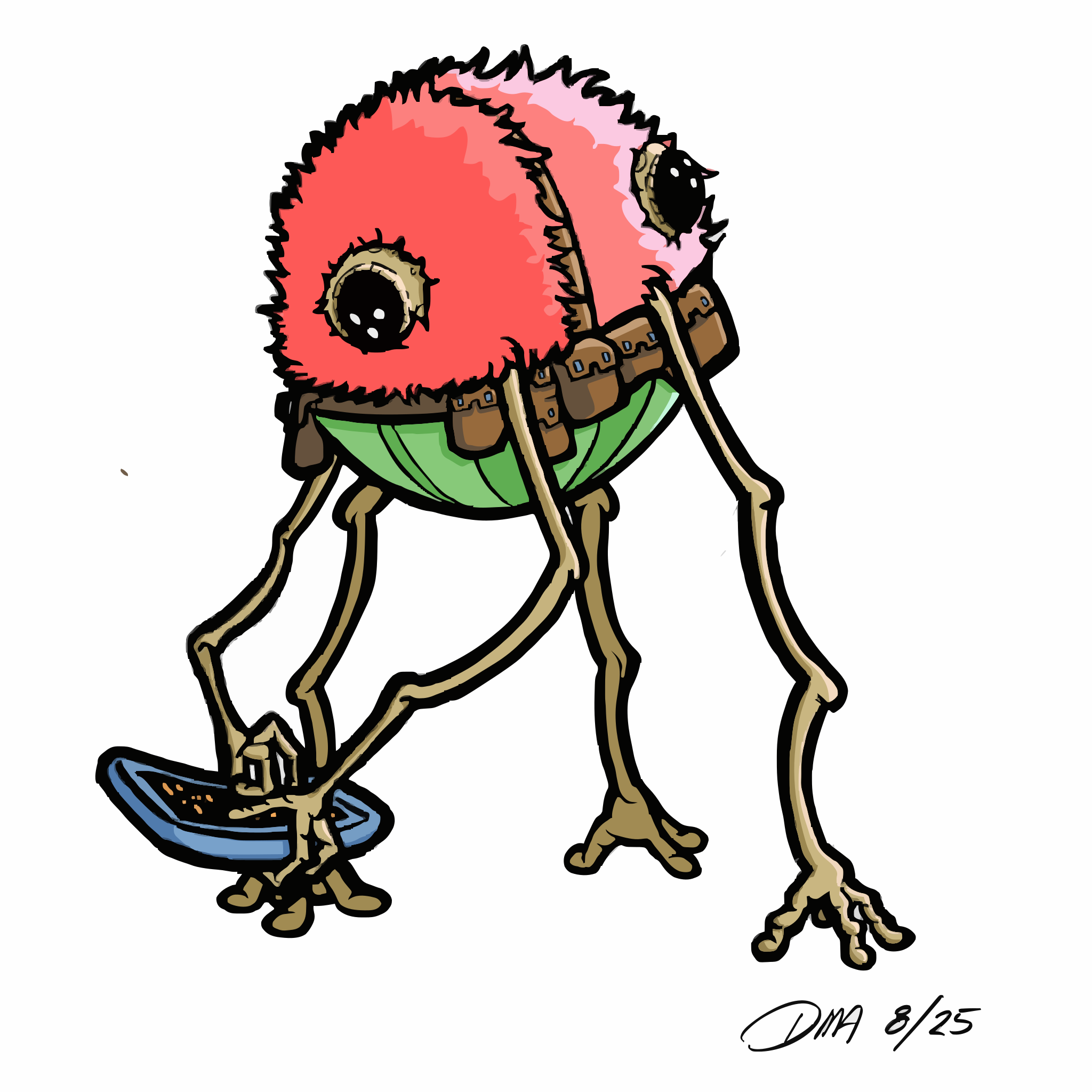
Sapients who mostly work in management and supervisory positions, in the middle tier of any organization. They are brightly colored puffy fur balls with three eyes and no visible mouth, nose, or ears, or legs, usually about a meter in diameter. They are either pink, green, or orange. They speak with a grating burbling voice. They have 5 stick-like, bare, segmented arms with no fur and 3 visible joints, usually a dull yellow. The arms end in hand-like structures with varying number of digits. It seems like their digits drop off and grow back relatively quickly. Their arms can reach up to 2 meters away from their body in any direction, and they use any 3 of them to walk. They are very light for their volume.
They usually wear a complex pleated wrap that covers their lower hemisphere, with straps over the top of their headbodytorso to hold it in place. The wrap has many pockets. They often wear wraps that contrast strongly with their natural coloring.
Bontions
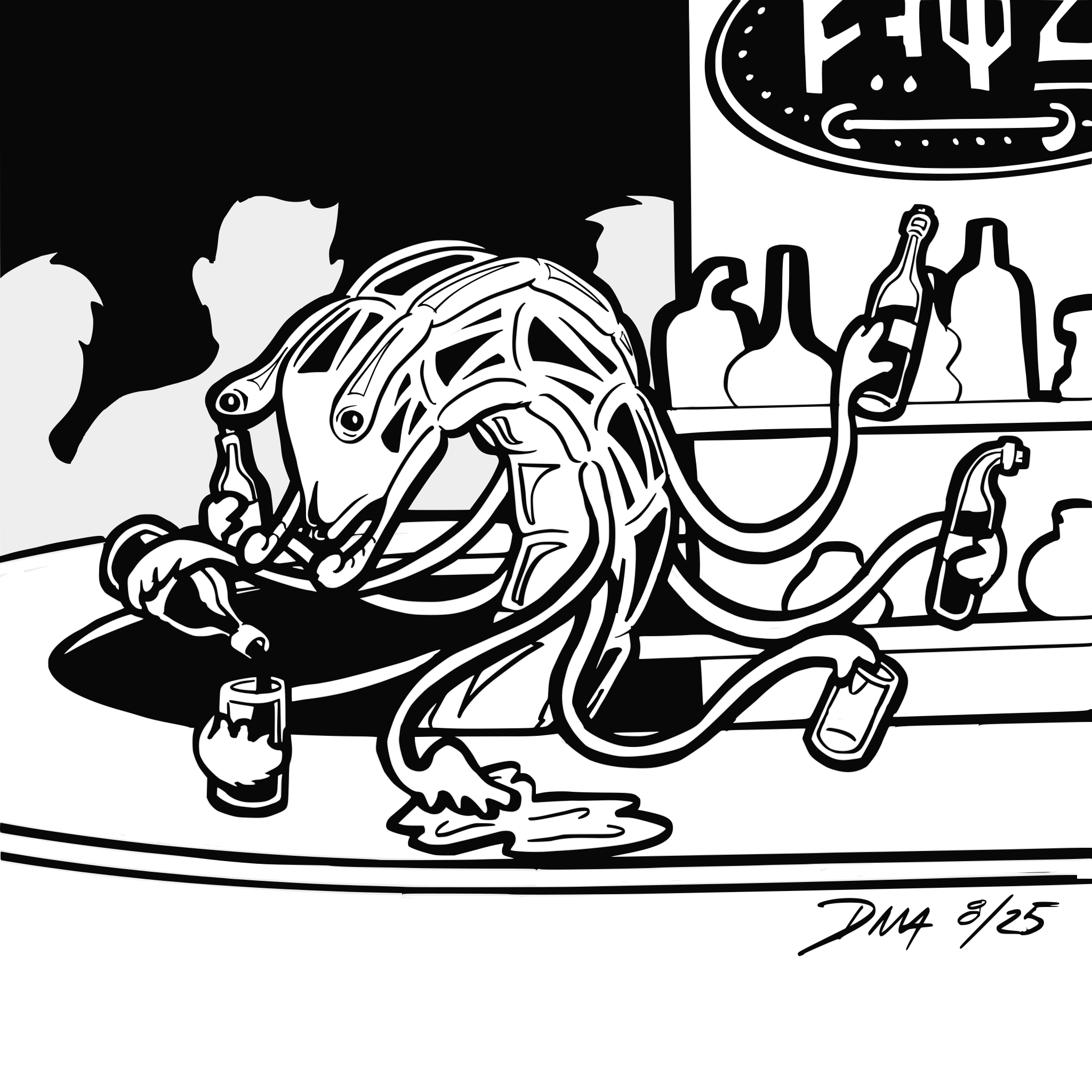
5' tall black and orange striped caterpillar with 8 tentacles.
The Calcoran Schools

The Calcoran Schools are a sapient species who evolved underwater, and are considered by humans to be a cross between jellyfish and dolphins. They are widely spread across known space, and strive to "civilize" the galaxy. Their financial systems are dominant in all the larger clusters of known space, and in most of the remaining clusters, so much so that sometimes the species are just referred to as "the Bankers."
They organized and funded the coalition that resisted the Invicta Swarm's expansion into the greater galaxy.
Most of the members of the larger Calcoran Schools follow a naming convention for surnames made up of the general Calcoran Schools Cluster ID (CSCID) for the cluster in which the member's school is based, followed by the names of the System, the orbiting body, and the school itself. This is joined with a conjunction indicating personal mating status, such as aan meaning an unjoined female, and finally the family name. There may be another modifier tied to the family name representing the member's status in the family.
Example: Dr. Ridley 6ad-Bayanul-Longshores-Swifttide aan Caast-Foundling, PhD
The Calcoran Schools Cluster Identifier (CSCID) is an identifier used by the Calcoran Schools data processing systems to uniquely identify clusters within known space.
Cronstak
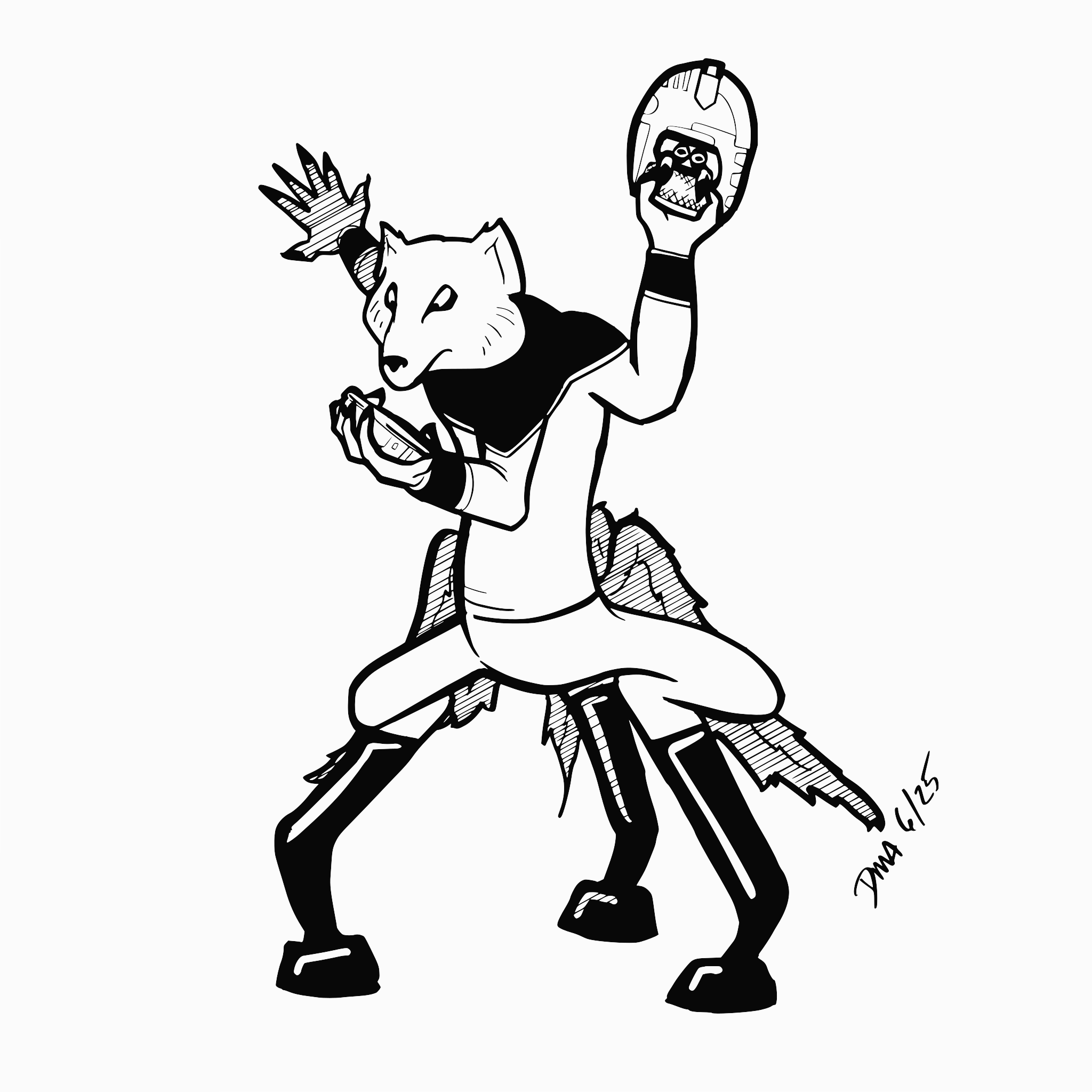
Sapients who looks like a three-legged mongoose with vestigial, furry wings, and 3 arms that end in 6 fingered hands, including 2 opposable thumbs.
Invicta Swarm
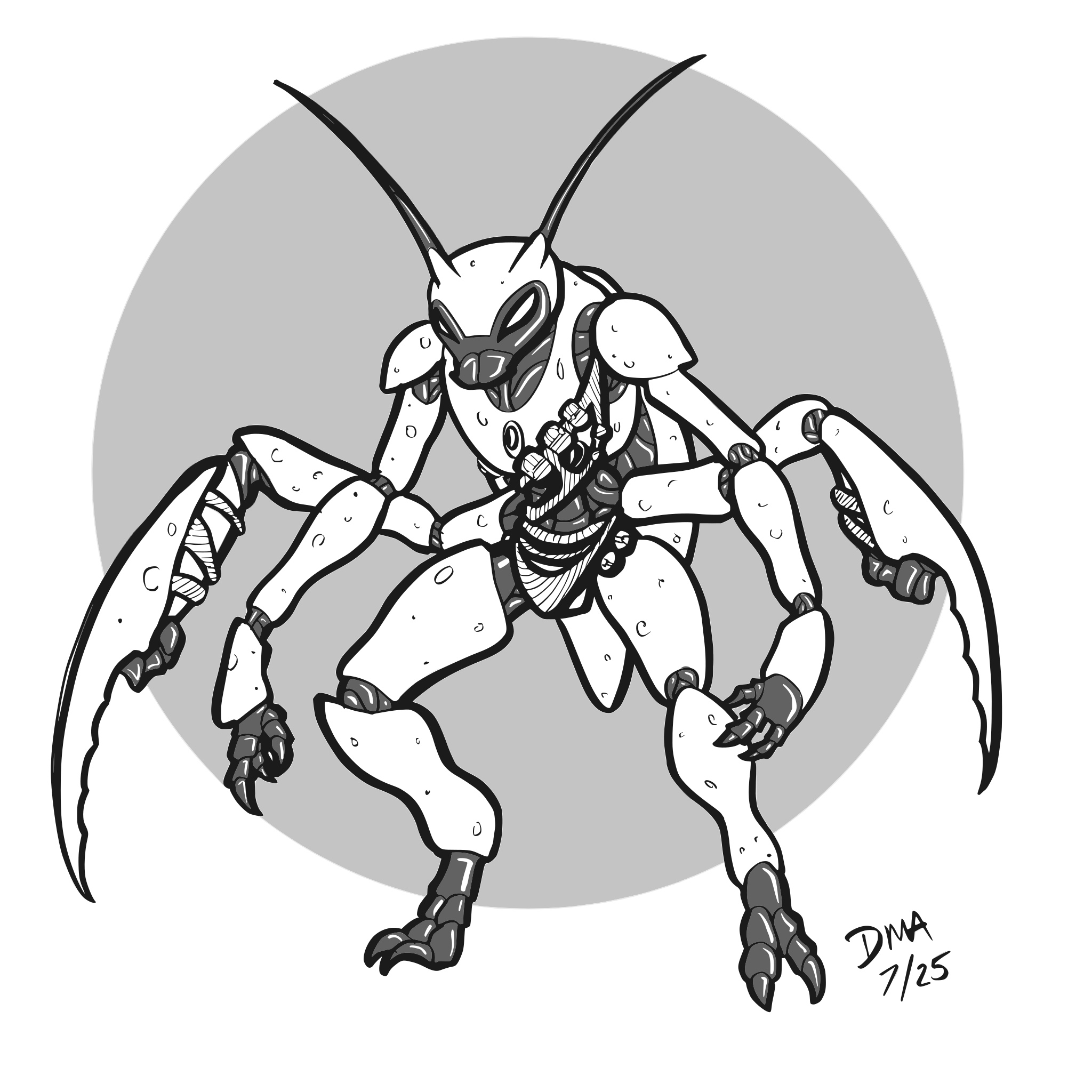
Ant-like sapients from a cluster far away from the local cluster. They are a caste based species, with individuals having very different body plans based on their purpose within the species. They are led by a Queen, and there are Soldier caste Invictans who are optimized for battle. There are variants of the Soldier caste, Pilot caste, who are hatched in tandem with the frame of their starfighter. They retain most of the hand-to-hand skills of the base Soldier caste, but have a preternatural connection to the systems of their starfighter.
The Invicta Swarm is a galactically-distant species of hostile, expansionist bug-aliens (Ant-Hive type). They have 11 Star Systems and a single Queen as their ruler and mother. The bugs are high-technology (T3), specializing in bioengineering and biotechnology (machines that have a semi-living neuronal basis, alongside normal circuits and machine parts).They co-evolve these semi-living machines with the Drones that will use them. Their Drones look like the Thri-Kreen from DnD. To see an Invictic Drone in our Local Cluster is very unlikely, and worrisome to those in-the-know.
In recent years, the Swarm has rapidly conquered territory, gaining a reputation for fearsome invincibility in battle that went beyond the distant area of space they come from. Funded by the Calcoran Schools, a coalition of distant civilizations (think a Local Cluster on the other side of the galaxy) "held the line" in the public narrative (there's a Starship Troopers-style propaganda Tattnet show about it) and the Swarm's expansion was halted. Let's say the coalition is called the Kel-Azaan Resistance.
The less commonly known truth is a weaponized Science Foundation-engineered virus infected the Swarm's technology and Queen, glitching their technology and lowering their birth rate.They could weasel out of this problem with the genetics of a new Queen. Their current larval Queens (Princesses) are infected.
(But prior to this virus deployment, a larval 'Princess' was stolen for research by the Science Foundation---this Princess is hidden somewhere in-or-around the Local Cluster, which is not specifically known to the Swarm, or there'd be far more investment in the Local Cluster than a single Drone. How this Princess is being used is not yet established.)
The Flotilla
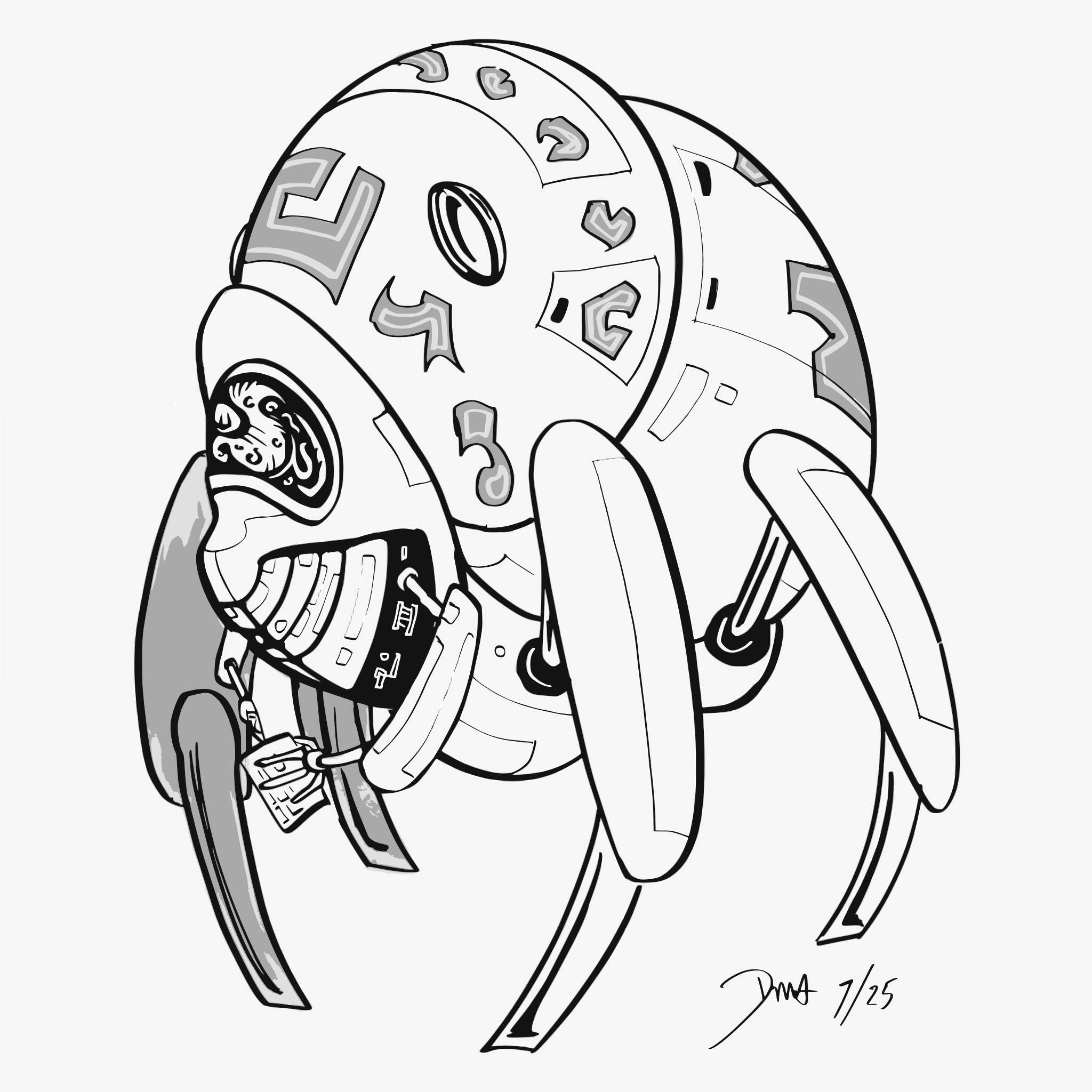
A species that lost their home world and now lives in a flotilla of ships in open space. Their biology and environment requirements are such that it's unlikely (if not impossible) for them to colonize a new world and/or build more than small structures. Correspondingly, no one knows what they really look like, because they're always in fully sealed suits when outside the safe environment of their ships.
Individuals can and do leave the Flotilla, so they do interact with other species, and overall they act almost ubiquitously humble and obsequious. They are open about telling the story of their lost home world, and of their hubris that caused it. Now there is a strong cultural push toward humility and "not rocking the boat".
The Flotilla moves nomadically from cluster to cluster every decade or two, but while they're around they try to establish trade relations with the locals systems, usually trading technology for the raw resources they need.
While more open and advanced systems find them to be great to establish relationships with (the Flotilla's presence is usually a boost to economies), there are also plenty of folks who don't trust that the Flotilla's kindness is genuine. They think that the Flotilla is just waiting for the right moment to start taking worlds. They also don't believe that hiding their appearance makes them untrustworthy, and think their "environmental constraints" are just a cover story.
There are factions within the Flotilla, but not much is known by outsiders about these factions and their differing goals.
Grulvax
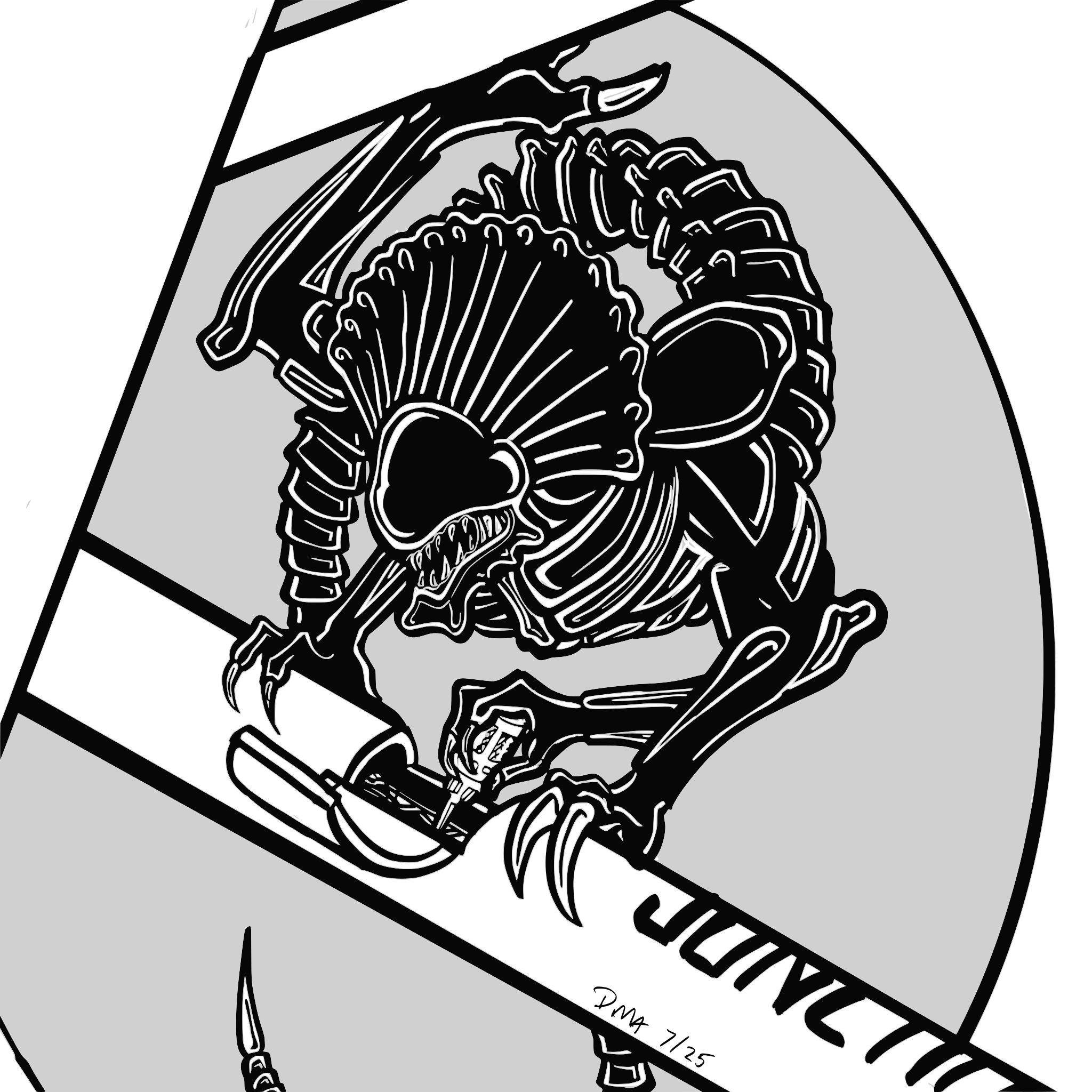
The Grulvax are a sapient species that is unknown in all of known space, aside from one individual, Jithal, currently engineer on the ship Dire Straits.
They have four arms, a head with no eyes, and a snake-like lower body. Because they can communicate with other members of their species without speaking, they will often be eerily silent, not speaking in situations other sapients would do so. They prefer confined spaces, as they live underground in tight warrens that are interconnected in a complex maze of twisty little passages. In these passages, they live communally, and do not have the idea many other sapients have of "personal space."
As mentioned, they do not have eyes, but use a sort of radar to make sense of the space around them.
Humans
These guys are the worst.
Ohlzor
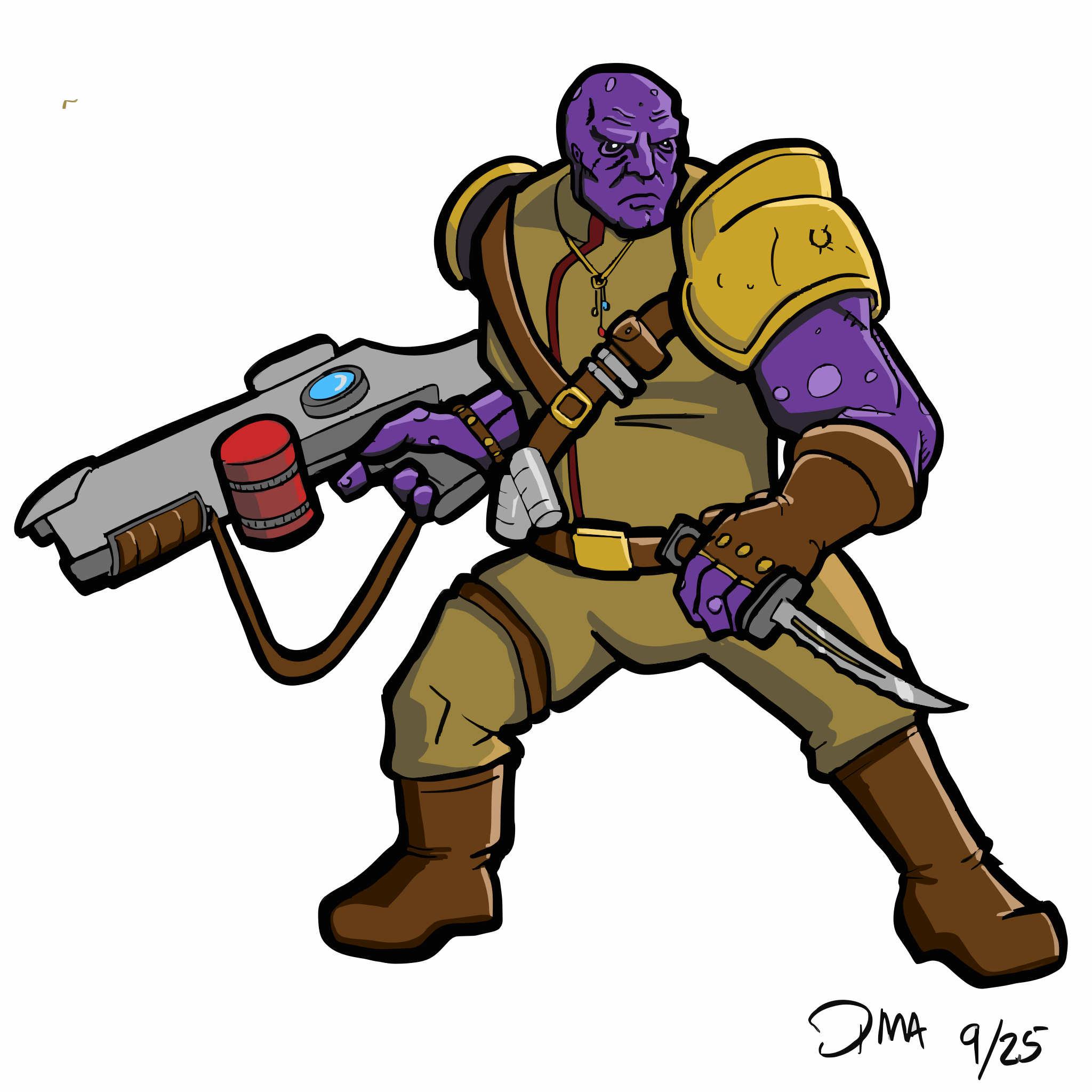
8' tall, heavyset purple bipedal sapients. Known for working as mercenaries doing whatever work is needed. Loyal to anyone who pays them.
Species Aspects
Fierce well trained mercenary guards
Slow Moving but Unflinching
Sariant
A species with a snake-like body plan. They have a reputation as being flighty and unable to focus. They sometimes forget to pay for things, and are known in some areas as being “light-fingered”.
So'enela
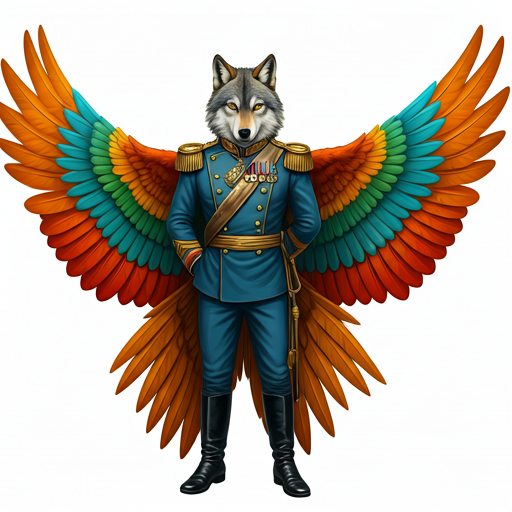
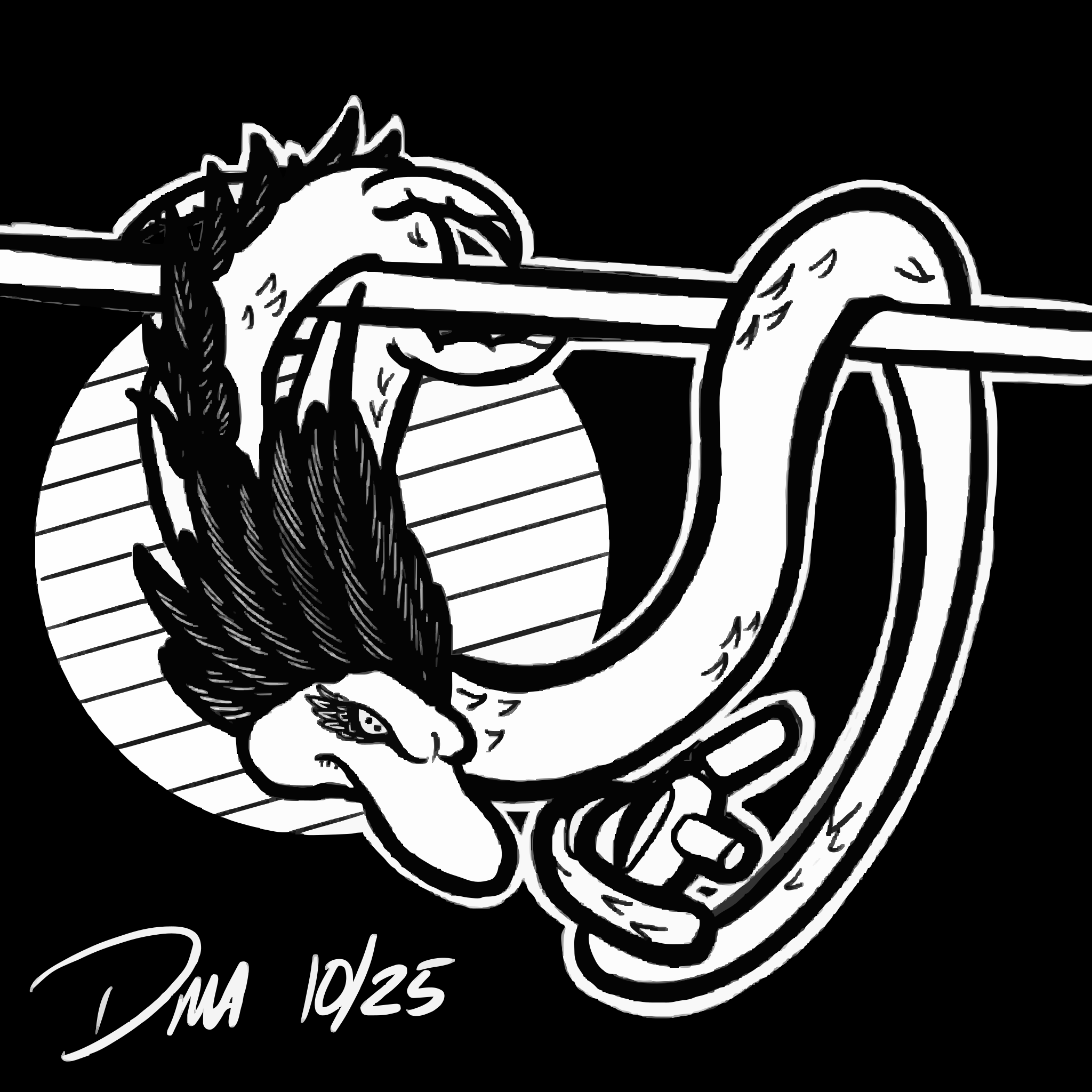
7' tall, lanky, bilateral symmetry, bipedal, 2 wings. Long face with large eyes, large pointy ears, and a small black nose. They have 2 arms with 5 fingered hands. They also have a tentacle below each of their arms that end in a mass of small tentacles that bifurcate down to the nano scale, allowing them to manipulate very, very, small things. These tentacles are usually kept out of harm's way when not in use, by tucking them under their clothes, as they are very delicate.
Their bodies, including their faces, are covered in short, soft fur, usually shading from cream on their front to brown on their back. Although coloration can vary quite a bit, it is always in shades of white, brown, gray, or black, sometimes spotted in various sizes. Their wings are vestigial, in the sense that they do not allow them to fly. The males' wings are feathered in multiple shades of bright colors, greens, reds, oranges, purples, blues, while the females are in the plainer colors usually matching their body fur.
They mate for life. The females lay a single clutch of 5-10 eggs, and the males keep them warm and raise the surviving young while the females typically provide food and maintain the homes.
Although So'enela are found all over both the local and neighboring clusters, they are the majority(and dominant) sapient species on Bane's Eye.
Species Aspects
Industrious and Analytical
Must Provide for Our Progeny
Our god is always watching what we do
Tardigrada
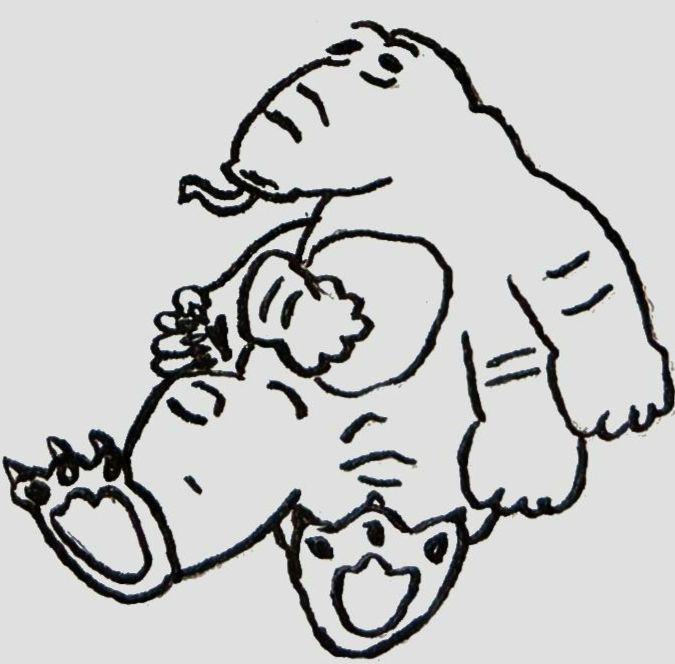
Excerpt of a student's notes from "Life in the Void: Vol. 2" by Dr. Steven Irwin
General
- Tardigrada are humanoid sapients evolved from tardigrades, and adapted to survive in the vaccum of space
- About four feet tall, two legs, four arms with small sloth-like claws, short snouts with a semi-prehensile tongue, thick skin, small eyes
- They do not breathe and can survive in the vacuum of space for extended periods
- Their metabolism works mostly by absorbing and breaking down (cosmic) radiation but they can eat "normal" food, supplemented with a small amount of other rocks/minerals from space dust
- They are extremeophiles and very long-lived, but as tough as their bodies are, their long-term memories aren't so robust and fade over time
- Their eyes are sensitive to a wide EM spectrum to help them find the radiation they need (esp. while floating in space), but it means they can be overwhelmed in "civilized" areas with lots of artificial lighting
Tun state
- When necessary (aka floating in space without enough radiation) they can enter a hibernation or "tun state" where they "dry out" and crystalize
- They can float in the tun state basically forever, with the hope that they eventually drift near enough to a radiation source that can re-awaken them
- While their body can usually resuscitate without issue (unless something hits them) their memory does still unfortunately degrade while in the tun state (though at a slower rate)
- Entering the tun state is not done lightly nor is it a "quick fix", it's a gamble that the Tardigrada accepts each time as most likely the "death" of their latest life in time and place, if not their permanent death
Culture
- Tardigrada have been dispersed throughout space for potentially tens of thousands of years, few if any have any knowledge, let alone memory or direct experience, of their homeworld or system
- While there are small enclaves of Tardigrada in different systems, it's not unheard of for small units to become separated from these larger groups, esp. during catastrophic events
- When forced, Tardigrada prefer to enter the tun state in groups, interlocking their limbs to keep drifting together (like sleeping otters)
- Tardigrada are a very social people, and even with other Tardigrada around they will try integrate themselves within other sapient societies
- The only thing worse than entering the tun state alone, is being "trapped" awake and alone
- Despite the danger, they feel an instinctive call to float in space, and therefore excel in integrating with space-faring cultures.
Vat Clones
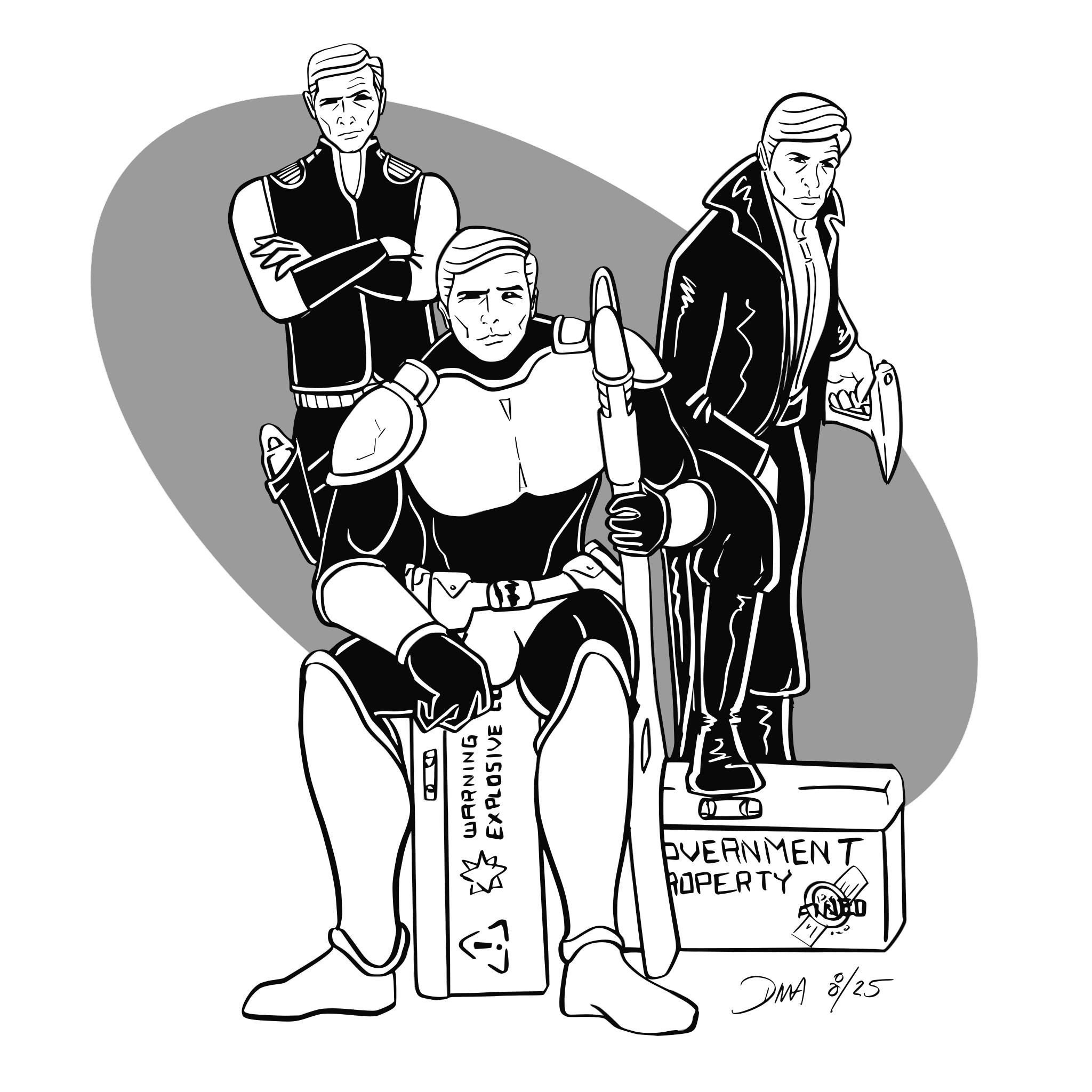
Even though Vat clones look like humans, they are gene-engineered from human DNA to be the perfect low-level soldier. It's not generally know who creates them, but new ones show up all the time, everywhere in known space, so someone must be doing it. They usually show up as new military units for some polity or another, fighting in local land wars, usually, occasionally as space marines, boarding enemy ships to take control of them, et cetera. They all look alike, they mostly act alike.
This is your first time working with military grown vat clones, isn't it?
Yeah, don't let their folksy manners throw you off. They may have strong emotions, but they usually don't show it. At best you'll get a slight frown or a pleasant smirk. There just is no changing their seemingly friendly laid back demeanor. That's about as much intensity you'll get from them, but they'll give you their all. Drill seargants have given up yelling at recruits because of them.
Vat clones would give you the spacesuit off their back while they're using it with a slight smile forever frozen on their face. Don't screw anyone over with them present, even another vat clone. They will put you in your place, even if you out-rank them, and most everyone out-ranks them.
It's said that they all look and act like Lee Majors. Who was Lee Majors? Not much is known about him, but he was one of the first ancient Earth spacers. He once survived a crash that shredded his craft, and he just stood up and walked it off. That's about all that's known of him.
They worship the idea of that man.
They claim that they have individual personalities. It's true, but it's going to take most people longer to see it. People make assumptions about vat clones, and they're usually right - until they're not.
They're almost everywhere. They're ubiquitous. Yeah, I know I just repeated myself. They serve. They grow older. They finish their tours. They transition to civilian life. They even sometimes get married and have kids, though a lot of people worry about how this weakens the whole genetic diversity thing. They may even fix that with gene therapy. They're happiest when they're helping out. They don't much care for promotions or being promoted with maybe an exception or two.
They like to hang out in vat clone bars.